
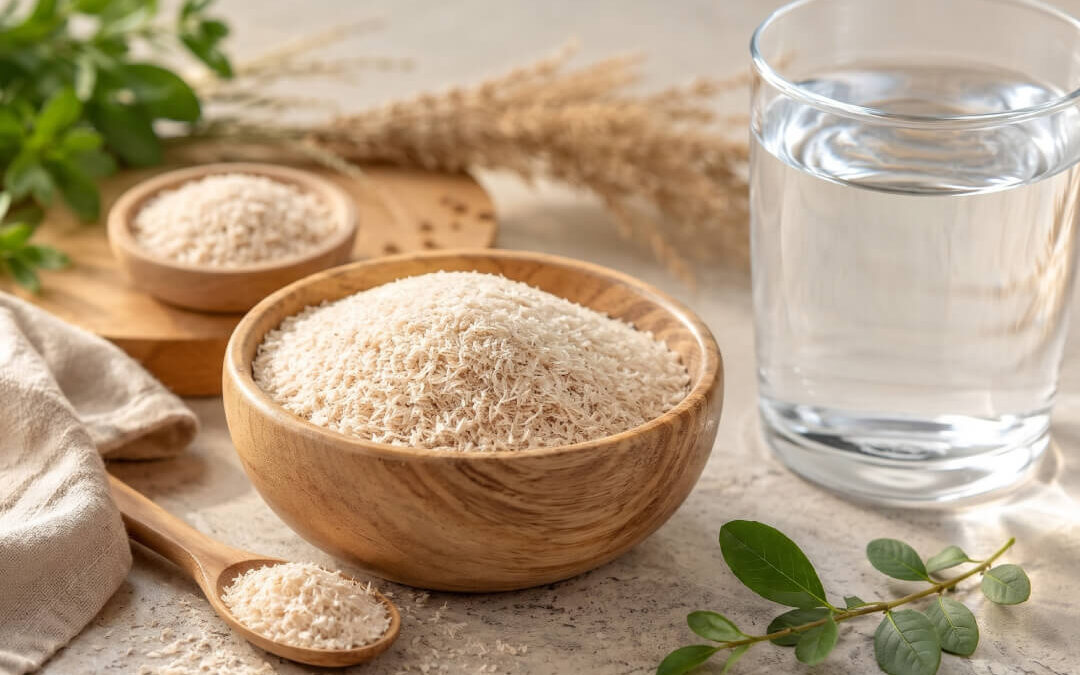
Looking for a simple way to add more fiber to your daily routine? Psyllium Husk is a plant-based source of dietary fiber known for supporting digestive health and regular bowel movements.
Its ability to absorb water makes it useful for people who want to increase their fiber intake and maintain healthy digestion.
But what's the difference between whole psyllium husk and powder? And how do you choose the right supplement?
In this guide, we'll explain how psyllium works, its main benefits, and how three options from Nature's Discount compare.
What Is Psyllium Husk?
Psyllium husk is the outer coating of seeds from Plantago ovata, a plant traditionally cultivated in regions including India. The husk is naturally rich in soluble fiber and can be used as a food ingredient or concentrated fiber supplement.
Unlike some fibers that remain relatively unchanged in water, psyllium has a strong ability to absorb liquid.
You may see it sold as:
- Whole psyllium husk
- Ground psyllium husk powder
- Capsules
- Fiber blends
- Flavored drink powders
Whole husk and powder come from the same part of the plant. The main difference is how finely the husk is processed and how that changes its texture and preparation.
Psyllium should complement, rather than replace, fiber-rich foods such as fruits, vegetables, legumes, oats, whole grains, nuts, and seeds.
How Does Psyllium Fiber Work?
Psyllium absorbs water and forms a gel-like substance in your digestive tract. This helps soften and add bulk to stool, supporting easier, more regular bowel movements.
This water-absorbing property is what makes psyllium useful for digestive regularity. It's also why taking it with enough liquid and following the preparation instructions is so important.
Psyllium is commonly described as a bulk-forming fiber.
What Are the Benefits of Psyllium Husk?
Psyllium can provide several benefits as part of a balanced diet and healthy lifestyle.
1. Helps Increase Daily Fiber Intake
Getting enough dietary fiber is important for digestive wellness, but many people don't consume enough through food alone.
Psyllium provides a convenient source of extra fiber that can help fill nutritional gaps.
2. Supports Regular Bowel Movements
Psyllium helps soften stool and promote healthy bowel regularity when taken with enough liquid.
Combining fiber with adequate hydration, physical activity, and consistent eating habits can support digestive health.
Want more tips for maintaining healthy digestion? 🌿 Explore our article: Digestive Wellness: Fiber, Herbal Support and Healthy Regularity.
3. Supports Heart Health
Soluble fiber from psyllium can help support healthy cholesterol levels.
The U.S. Food and Drug Administration recognizes that qualifying amounts of soluble fiber from psyllium husk, consumed as part of a diet low in saturated fat and cholesterol, may help reduce the risk of coronary heart disease.
Psyllium is one part of a heart-healthy lifestyle, not a replacement for balanced nutrition or medical care.
4. Promotes a Feeling of Fullness
Psyllium's ability to absorb water may help promote a feeling of fullness after meals.
This can be useful for people interested in maintaining balanced eating habits, but psyllium should not be considered a weight-loss solution.
Interested in the connection between fiber and healthy weight management? Read our guide: Fiber Is the New Protein: How to Support Gut Health and Weight Goals After 40.
Whole Psyllium Husk vs. Psyllium Husk Powder: What’s the Difference?
Both provide psyllium fiber. The difference comes mostly from texture and how finely the husk has been ground.
| Whole Psyllium Husk | Psyllium Husk Powder | |
| Texture | Flakier and more noticeable | Fine and smooth |
| Mixing | Adds more texture | Blends more evenly |
| Thickening | Thickens when hydrated | Can thicken very quickly |
| Common uses | Water, oats, smoothies, baking | Drinks, smoothies, oatmeal, baking |
| Main ingredient | Psyllium seed husk | Ground psyllium seed husk |
Which is better?
Neither form is automatically better.
Whole husk may appeal to people who don't mind a little texture in their food or drinks.
Powder may be more convenient for blending into beverages or recipes.
Your choice depends on your preferences, how you plan to use it, and the serving instructions on the label.
What Should You Look for in a Psyllium Supplement?
Psyllium products can look similar from the front of the package. Turn the container around, and a few details become much more useful.
Ingredients
Check whether the product contains only psyllium husk or includes flavors, sweeteners, herbs, probiotics, or other ingredients.
For a simple fiber routine, you may prefer a single-ingredient formula.
Fiber per serving
Look at the amount of dietary or soluble fiber provided by the actual serving size.
Two products may use the same ingredient but recommend different serving amounts.
Whole husk or powder
Choose based on how you plan to use it. Whole husk provides more texture. Fine powder may blend more easily but usually thickens quickly.
Dietary preferences and certifications
Depending on your needs, you may want to check for:
- Organic certification
- Non-GMO verification
- Vegan or vegetarian suitability
- Gluten-free labeling
- Dairy- or soy-free status
Directions and liquid requirements
This is one of the most important parts of the label.
Psyllium must be taken with enough liquid. Different brands may specify 8 or 10 ounces or more, and some recommend drinking another glass afterward.
Follow the directions for your specific product.
Explore Three Psyllium Husk Options at Nature’s Discount
If you are choosing between whole husk and powder, these three options show how the same basic ingredient can fit different routines.
Organic India Psyllium Husk: Organic Whole Husk Fiber
Ingredient:
Organic psyllium (Plantago ovata) seed husk.
Format:
Whole husk fiber.
Net content:
12 oz (340 g).
Fiber per serving:
A 1 tablespoon serving, approximately 5 g, provides about 4 g of dietary fiber, including approximately 3 g of soluble fiber.
What makes it different:
Organic India keeps the formula very simple with organic whole psyllium husk. The product is Certified Organic, and the company identifies it as part of its plant-based fiber line.
The whole-husk texture makes it practical for water, smoothies, oatmeal, and baking.
How to use it:
Organic India directs users to mix 1 tablespoon into at least 10 oz of liquid, 1 to 2 times daily. The brand recommends starting with half a serving and increasing gradually.
It also recommends drinking an additional 10 oz of water after taking the fiber.
Source Naturals Psyllium Husk
Ingredient:
Psyllium seed husk.
Format:
Powder.
Net content:
12 oz.
Fiber per serving:
One rounded teaspoon, approximately 5 g, provides 4 g of soluble fiber.
What makes it different:
Source Naturals identifies this formula as plant-based and Non-GMO validated. It is suitable for vegetarians and contains no yeast, dairy, egg, gluten, corn, soy, wheat, added sugar, preservatives, or artificial colors, flavors, or fragrances.
How to use it:
The label recommends briskly stirring 1 rounded teaspoon into 8 oz of liquid, 1 to 2 times daily.
Drink it immediately, before the mixture begins to gel.
Sunwarrior Organic Psyllium Husk Powder
Ingredient:
Organic psyllium husk powder.
Format:
Fine powder.
Net content:
0.73 lb (330 g), approximately 66 servings.
Fiber per serving:
A 5 g serving provides approximately 4 g of dietary fiber.
What makes it different:
This is a finely ground organic psyllium powder that can be used in drinks, smoothies, oatmeal, pancakes, soups, and baking.
Sunwarrior identifies the product as:
- Vegan
- Gluten-free
- Dairy-free
- Soy-free
- 0 g added sugar
Its finer texture may appeal to someone who wants to blend psyllium into food or beverages without the more noticeable texture of whole husk.
How to use it:
A serving is approximately one scoop, or 5 g. Sunwarrior recommends adding the powder to drinks or foods and emphasizes taking psyllium with plenty of water, including at least one full glass per serving.
Organic India vs. Source Naturals vs. Sunwarrior: Psyllium Husk Comparison
| Product | Format | Main Ingredient | Fiber per Serving | Net Content | Notable Features |
| Organic India Psyllium Husk | Whole husk | Organic psyllium seed husk | 4 g dietary fiber, including 3 g soluble fiber | 12 oz / 340 g | Certified Organic, whole-husk texture |
| Source Naturals Psyllium Husk | Powder | Psyllium seed husk | 4 g soluble fiber | 12 oz | Non-GMO validated, plant-based, vegetarian |
| Sunwarrior Organic Psyllium Husk Powder | Fine powder | Organic psyllium husk powder | Approx. 4 g dietary fiber | 330 g / 0.73 lb | Organic, vegan, gluten-free, dairy-free, soy-free |
So which one might fit you?
Choose Organic India if you prefer organic whole husk and do not mind a more noticeable texture.
Consider Source Naturals if you want a simple psyllium powder with 4 g of soluble fiber per serving.
Look at Sunwarrior if you prefer a finely ground organic powder that is easy to add to smoothies and recipes.
There is no need to make the choice complicated. Come see us at Nature’s Discount and tell us how you plan to use your fiber. We can help you compare the containers and find the format that makes the most sense for your routine.
How to Take Psyllium Husk Safely
The most important rule with psyllium is simple: take it with enough liquid.
Dry or inadequately hydrated psyllium expands as it absorbs water. Taking it without enough fluid can create a choking or blockage risk.
A safer routine includes:
- Follow the serving instructions on your product.
- Use the full amount of liquid listed on the label.
- Stir well.
- Drink promptly before the mixture becomes too thick.
- Drink additional water when the label recommends it.
- Start gradually if you are new to fiber.
- Avoid psyllium if you have difficulty swallowing unless a healthcare professional tells you it is appropriate.
- Ask for medical guidance if you have a history of intestinal blockage or significant digestive disease.
Psyllium may also affect the absorption of certain medications.
Organic India advises allowing at least one hour before and after medications. MedlinePlus lists some specific medications that require wider spacing and recommends discussing medication use with a doctor or pharmacist.
If you take prescription medication, ask before deciding on your own timing schedule.
And remember: adding a large amount of fiber all at once can lead to gas, bloating, or discomfort. Give your digestive system time to adjust.
Frequently Asked Questions About Psyllium Husk
Is Psyllium Husk the Same as Dietary Fiber?
Psyllium husk is a source of dietary fiber, but dietary fiber is a much broader category.
Fiber also comes from vegetables, fruits, beans, lentils, whole grains, chia, flaxseed, nuts, and many other foods.
Psyllium is particularly rich in soluble, gel-forming fiber.
What’s the Difference Between Whole Psyllium Husk and Powder?
Whole husk has a coarser, flakier texture. Powder is the same husk ground more finely.
The powder tends to mix more smoothly and can thicken liquids quickly. Whole husk may be more noticeable in water but works well in oats, smoothies, and recipes.
The comparison earlier in this guide can help you decide which texture fits your routine.
How Do You Mix Psyllium Husk?
Always start with the instructions on your package.
For the products in this guide, that usually means combining the recommended serving with approximately 8 to 10 ounces or more of liquid, stirring briskly, and consuming it promptly.
Psyllium begins absorbing water quickly, so leaving the drink on the counter for several minutes can turn it into a much thicker mixture.
Why Should You Take Psyllium Husk With Plenty of Water?
Psyllium expands when it absorbs liquid. Enough water helps the fiber hydrate and move through the digestive system properly.
Without adequate fluid, psyllium can swell before reaching the stomach and may create a choking or blockage risk.
That is why the liquid instructions on psyllium labels should never be treated as optional.
Can You Take Psyllium Husk With Medications?
Psyllium can affect how some medications are absorbed, so timing may matter.
Some product labels recommend separating psyllium from medication by at least an hour. Certain medicines may require a different interval.
If you use prescription medications, ask your doctor or pharmacist how much time you should leave between your medicine and psyllium rather than using one rule for every medication.
Find Psyllium Husk at Nature’s Discount
Choosing psyllium becomes much easier once you know whether you prefer whole husk or powder and how much fiber you want per serving.
Visit us at Nature’s Discount and tell us what you are looking for, whether that is everyday fiber, digestive regularity, a powder for smoothies, or a whole-husk option for your daily routine.
Our team can help you compare ingredients, fiber amounts, formats, and label directions, and check which products are currently available in our stores.
*Products may vary per island.

